SCARPA

SCARPA had a record year in 2021, helped along by the jump in demand for outdoor gear through the lockdowns. Nearly all of that search visibility came from people already looking for the brand by name, so 2022 was the year to go after everyone else, the people comparing boots and gear who hadn't settled on a brand yet.
Our SEO and Content teams worked on it together, and within six months 31% more of SCARPA's focus keywords were ranking on page one of Google.
The challenge
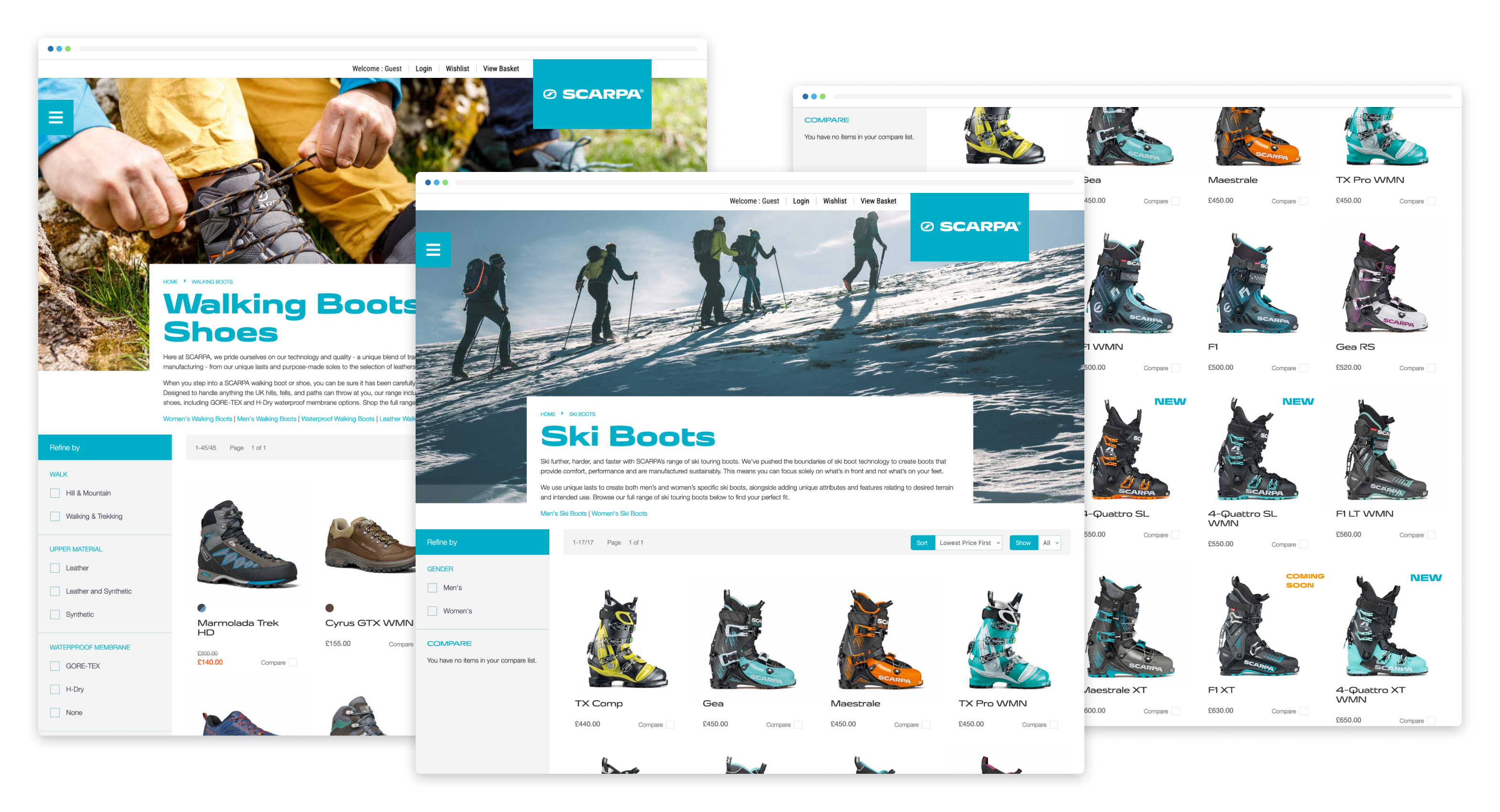
Outdoor footwear is a busy search market, with big retailers and rival brands all going for the same shoppers. SCARPA's category pages were written in the brand's own product language, which reads well if you already know the range, but it didn't line up with what people actually type into Google while they're still weighing options up. That mismatch was the main reason those pages weren't picking up non-brand searches.
What SCARPA asked us for was straightforward enough: get them in front of people searching for the sort of products they make rather than for SCARPA by name, and do it without losing how the brand sounds.
Our strategy
We started with the demand rather than the site. Our SEO team looked at how many people search for the non-brand terms around each product line, put that next to what SCARPA wanted to sell, and used the two together to decide which lines were worth the effort.
For each of those we built a topic cluster, with the main category page at the centre and the subcategories and guides feeding into it. That gave Google a clearer read on what each part of the site covered, and it gave shoppers a sensible route from a broad search down to the product they were actually after.
Results
-
31%
more non-brand focus keywords on page one, in six months
-
38%
more non-brand focus keywords on page two
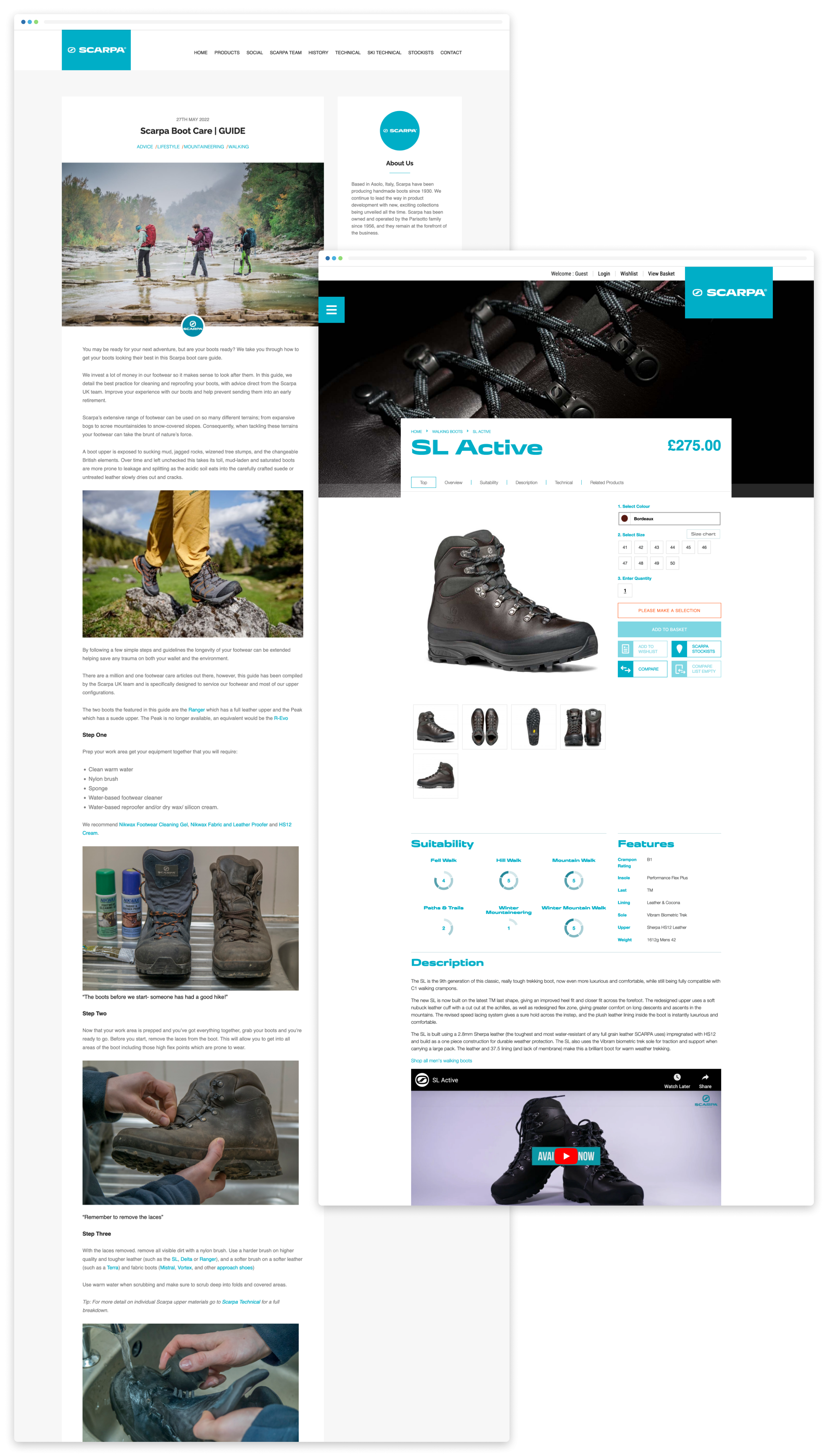
Category copy written around how people search
We ran keyword research across every SCARPA category, then our content and SEO teams rewrote the category copy together rather than handing it back and forth. The new copy uses the words shoppers search for and still sounds like SCARPA, which was the bit that mattered most to them.
Internal linking
We put links between related categories, subcategories and guides, and varied the link text rather than using the same phrase every time, which helped Google work out how the pages relate to each other. We mapped the routes shoppers take through the site while we were in there, so the new links also cut the number of clicks between a guide and the product someone actually wants.
The move to Shopify
SCARPA moved off their legacy Chameleon CMS onto Shopify, which we designed and built. Our SEO team mapped more than 1,500 redirects across before launch, so the rankings built up through this work carried over rather than starting again from scratch.
Related Case Studies
-
 Connect with your customers across the whole search landscape
 From zero visibility to 19k+ organic visits for new landscaping brand, TalaseyRead Case Study
-
 Connect with your customers across the whole search landscape
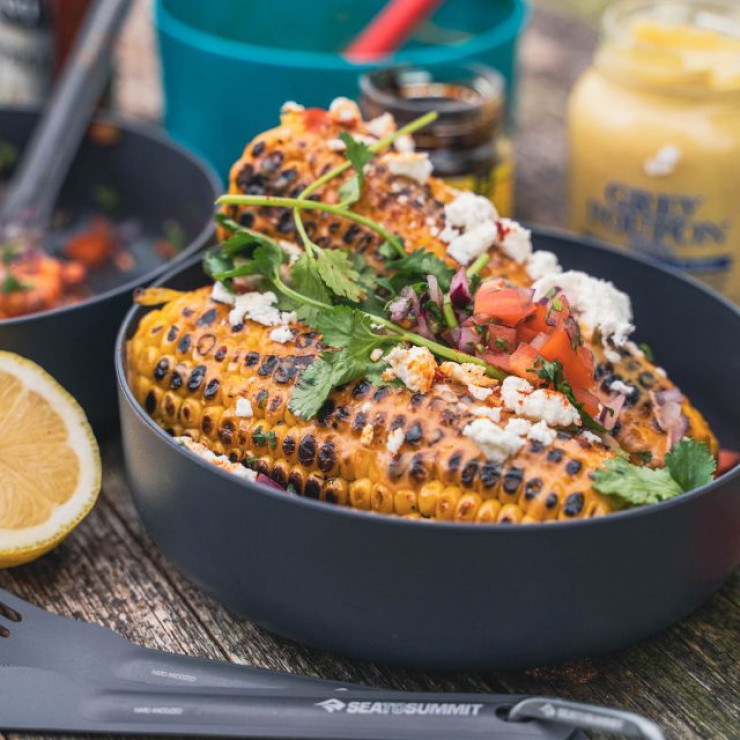
 70% more page-one keywords and 64% more organic revenue for outdoor gear brand, Sea to SummitRead Case Study
-
 Connect with your customers across the whole search landscape
 A 413% increase in organic sessions from a supercharged SEO, content and UX StrategyRead Case Study
-
 Ecommerce Digital PR that gets your brand noticed
 210+ links and 10,500 social shares for this lucrative e-commerce start-upRead Case Study